Thick-wall pre-cut insulation sections for 35 kV busbars, verified at 105 kV power frequency withstand.
| Models | MPG35 |
|---|---|
| Operating temp | -40 to +105 °C |
| Voltage class | 35 kV |
| Standards | GB/T 12706, UL 94 V-0, RoHS |
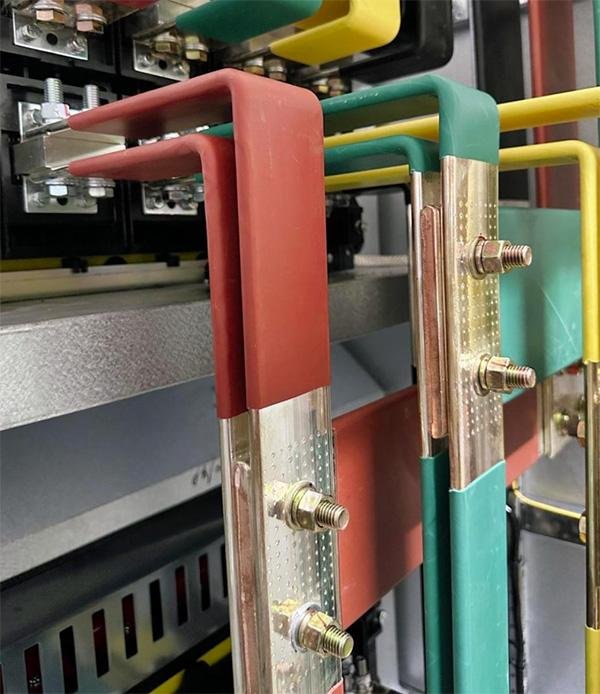
MPG35 is the highest voltage grade of the MPG busbar tubing family: a thick-wall radiation-crosslinked polyolefin product formulated for insulating copper and aluminum busbars in 35 kV distribution equipment. Its 2.0+ mm recovered walls and 105 kV power frequency withstand capability bring shrink-to-fit insulation to primary distribution switchgear that previously required large air clearances or custom-molded covers.
MPG35 is supplied as pre-cut 1 m sections sized to standard busbar widths, which are slipped over the busbar before joint assembly. Upon heating to 110-130°C, each section recovers to grip the busbar surface without adhesive, relying on mechanical shrink force to maintain permanent contact. Busbar joint protection boxes are available per customer requirements for T-joints, L-joints and cross-overs.
| Property | Test Method | Requirement |
|---|---|---|
| Limited oxygen index (LOI) | — | >30 |
| Low-temperature flexibility | -40°C | No cracking |
| Flame retardancy | UL 94 | V-0 equivalent |
| Tracking resistance | IEC 60587 | 1A 4.5 kV (typical for crosslinked PO) |
| Property | Test Method | Typical Value |
|---|---|---|
| Long-term operating temperature | — | 105°C |
| Tensile strength | ASTM D638 | 11 MPa |
| Elongation at break | ASTM D638 | 300% |
| Volume resistivity | IEC 93 | 2×10¹⁴ Ω·cm |
| Water absorption | ISO 62 | <0.5% |
| Tensile after aging (158°C, 7 d) | ASTM D638 | 11 MPa |
| Elongation after aging (158°C, 7 d) | ASTM D638 | 310% |
| Dielectric strength | IEC 243 | 23 kV/mm |
| Power frequency withstand | — | 105 kV, 60 s, no flashover |
| Wall bias | — | 15% |
| Longitudinal change (200°C, 3 min) | — | -5% |
Internal test data. Questions on parameters? Contact our engineers.
| Model | Busbar Width (mm) | Recovered ID (mm) | Section (mm) |
|---|---|---|---|
| MPG35-XX-25/10 | 20-30 | <10 | Φ25 × 1000 |
| MPG35-XX-30/12 | 30-40 | <12 | Φ30 × 1000 |
| MPG35-XX-40/16 | 40-50 | <16 | Φ40 × 1000 |
| MPG35-XX-50/20 | 50-60 | <20 | Φ50 × 1000 |
| MPG35-XX-65/25 | 60-70 | <25 | Φ65 × 1000 |
| MPG35-XX-75/30 | 80-90 | <30 | Φ75 × 1000 |
| MPG35-XX-85/35 | 90-100 | <35 | Φ85 × 1000 |
| MPG35-XX-100/45 | 120 | <45 | Φ100 × 1000 |
| MPG35-XX-120/50 | 140 | <50 | Φ120 × 1000 |
| MPG35-XX-150/60 | 180 | <60 | Φ150 × 1000 |
| MPG35-XX-200/60 | 240 | <60 | Φ200 × 1000 |
Standard color: black. Custom colors available — contact our sales team.
Cover main, distribution and tie busbars in 35 kV metal-clad switchgear. Pre-cut sections and joint boxes replace custom-molded boots at every busbar joint.
Insulate isolated phase bus and non-segregated phase bus runs in power generation facilities. The tracking-resistant formulation handles thermal cycling and vibration in rotating machine connections.
Insulate LV bushing leads and delta connections in dry-type and oil-filled transformer enclosures. The 105°C continuous rating matches Class A and Class B insulation systems.
Still deciding? Contact our engineers.
Heat shrink tubing rarely fails in service when it's the right product, correctly installed.…
Solar installations push cable protection harder than most environments. DC strings on a rooftop…
Insulated busbars let you build smaller switchgear. Instead of relying on air clearances between…
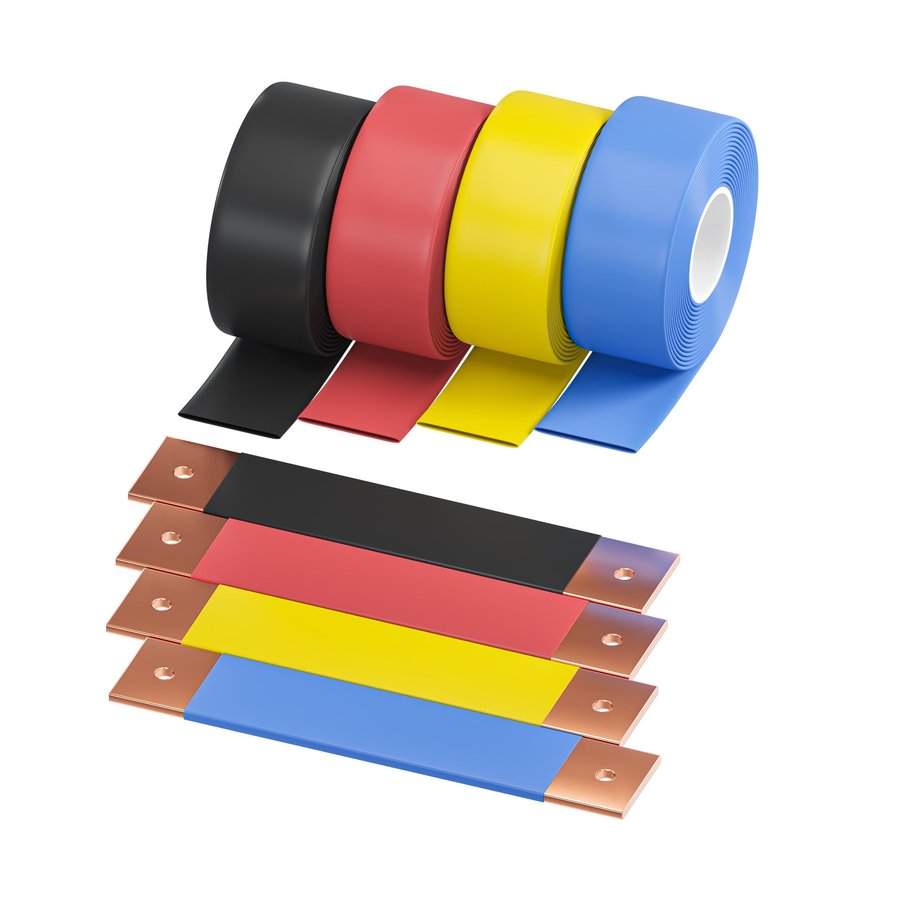
Thick-wall shrink-to-fit insulation for copper and aluminum busbars in low-voltage…
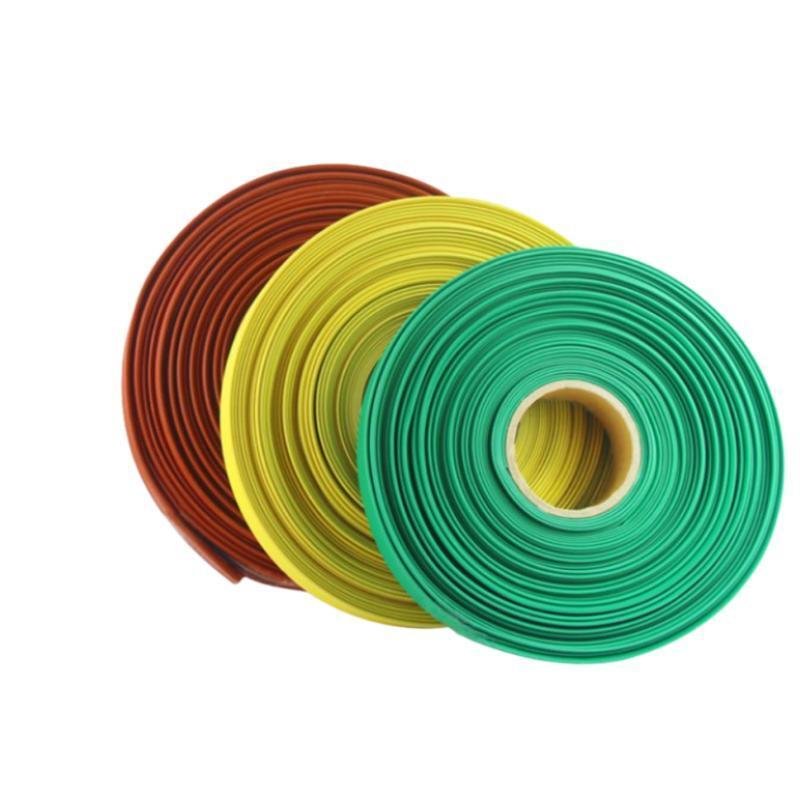
Continuous-length thick-wall tubing for medium-voltage busbars. Shrinks clearance distances by…
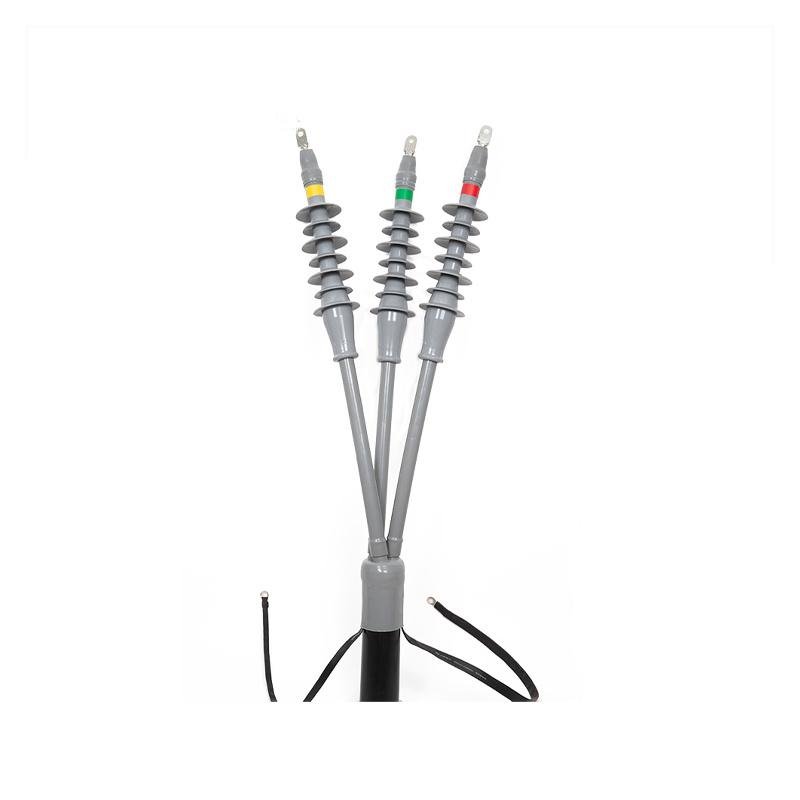
No heat source required. Silicone rubber. 1-35 kV.
Tell us your cable size, voltage and environment. We reply within one business day.
Request a Quote